Fig

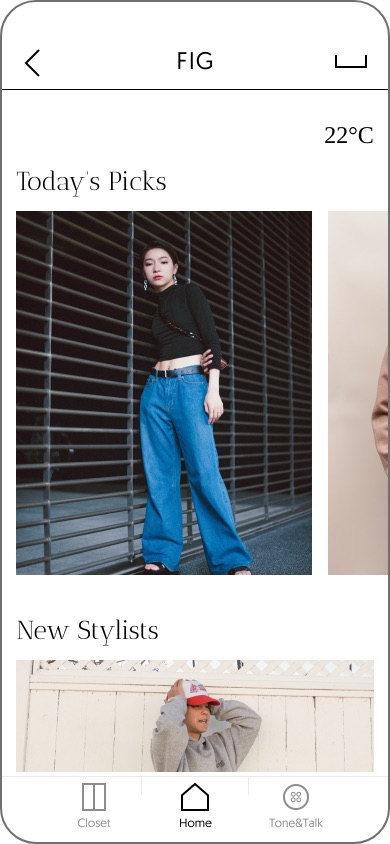
Fig app home screen — wordmark and Today's Picks fashion photo

Design by

Kyoung Hoon Kim
ChangYun Lee

Prototype

Fig

Duration

09/2021 - 10/2021

Need a Perfect Style?

Project Overview

I still remember when we have been casually talking about the world of fashion for hours. Fashion trends change from time to time, but the style does not apply to everyone. We all share a unique physical appearance of our own, and it is thus essential to dig through a pile of clothes that is just for us. Then what happens if there exists a utopia where someone just magically finds you the best suit with just a single tap? From this idea, we decided to create a refined proposal and send it to fashion experts and stylist youtubers to make this real.

How it started

To begin with, we required clarifying unstated problems in the fashion market and existing demands to know what we wanted to accomplish throughout this project. To this issue, the fashion industry seems to have a wicked problem where the supply and the demands do not meet each other. Even while the interest in fashion increased overall, most stylists have difficulty bringing enough attention to advertise themselves.

Problems & Demands

  • Even if one doesn’t have to consider how others think about them and how they dress, the formality of clothing could indeed influence the way others perceive a person and how people perceive themselves, according to the study. In that manner, people spend much time digging through pile of clothes to decide what to wear for the day.

  • Even with the increase of interest in fashion, however, there are still people who do not have a clue how to stylize themselves properly, and there aren’t guides for them as we all share a unique physical appearance of our own.

  • 66% of the stylists get paid about $12 per hour for their work, which shows how they cannot really afford to live just with a job they have specialized in.

  • Due to COVID-19, 61% of respondents showed an increment in online shopping behaviors for clothes.

Design Goals

  • Allowing stylists to utilize their talent to earn a living through a field they have studied by having virtual customers.

  • Let the users who do not know how to stylize themselves properly find the best fit and learn what they really want from their style.

  • Reduce the time spent by users on deciding what to wear for the day.

  • Due to COVID-19, 61% of respondents showed an increment in online shopping behaviors for clothes.

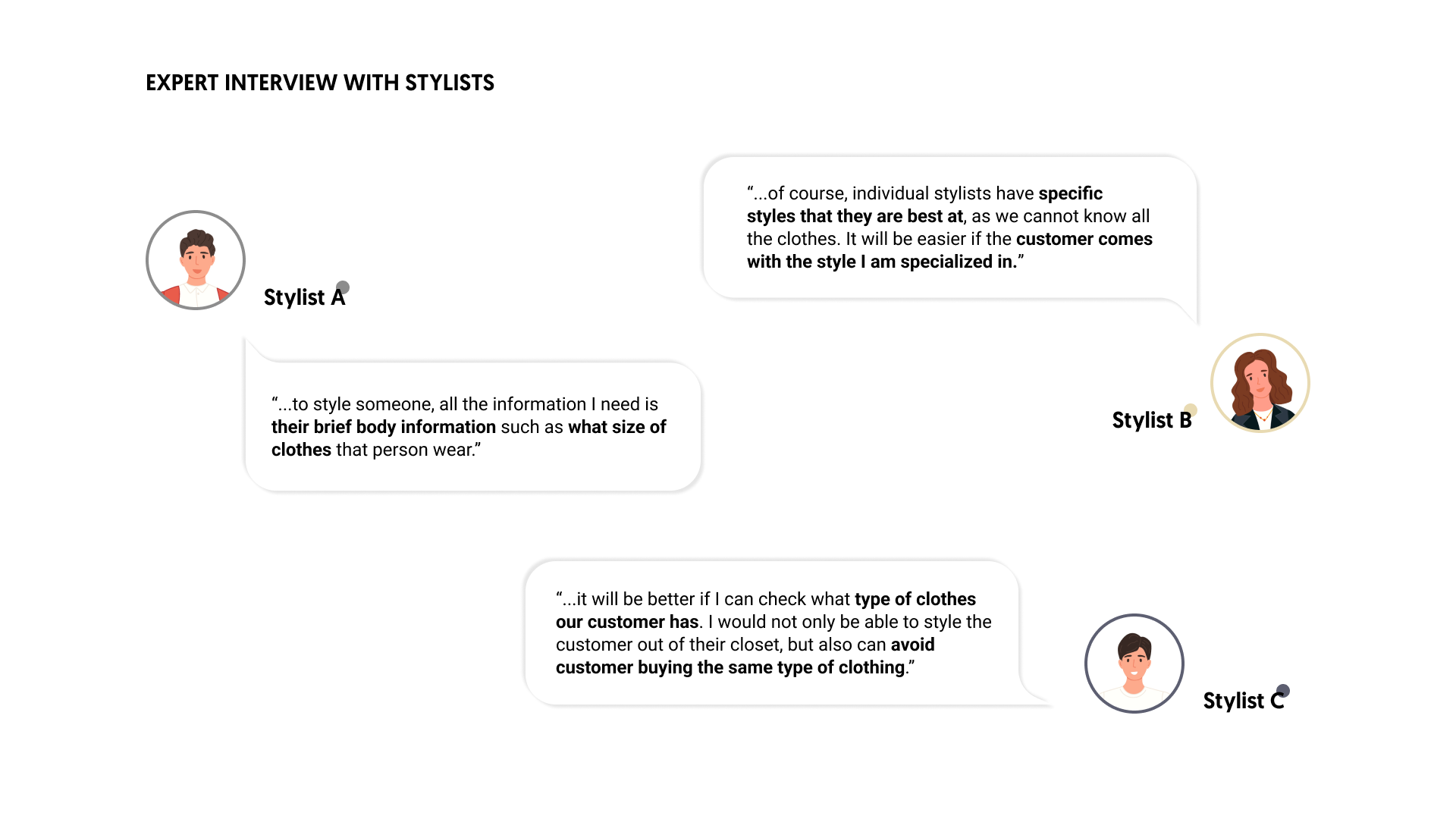
Expert Interview with stylists

Slide: Expert Interview with Stylists — three stylist quote bubbles

Key Insights

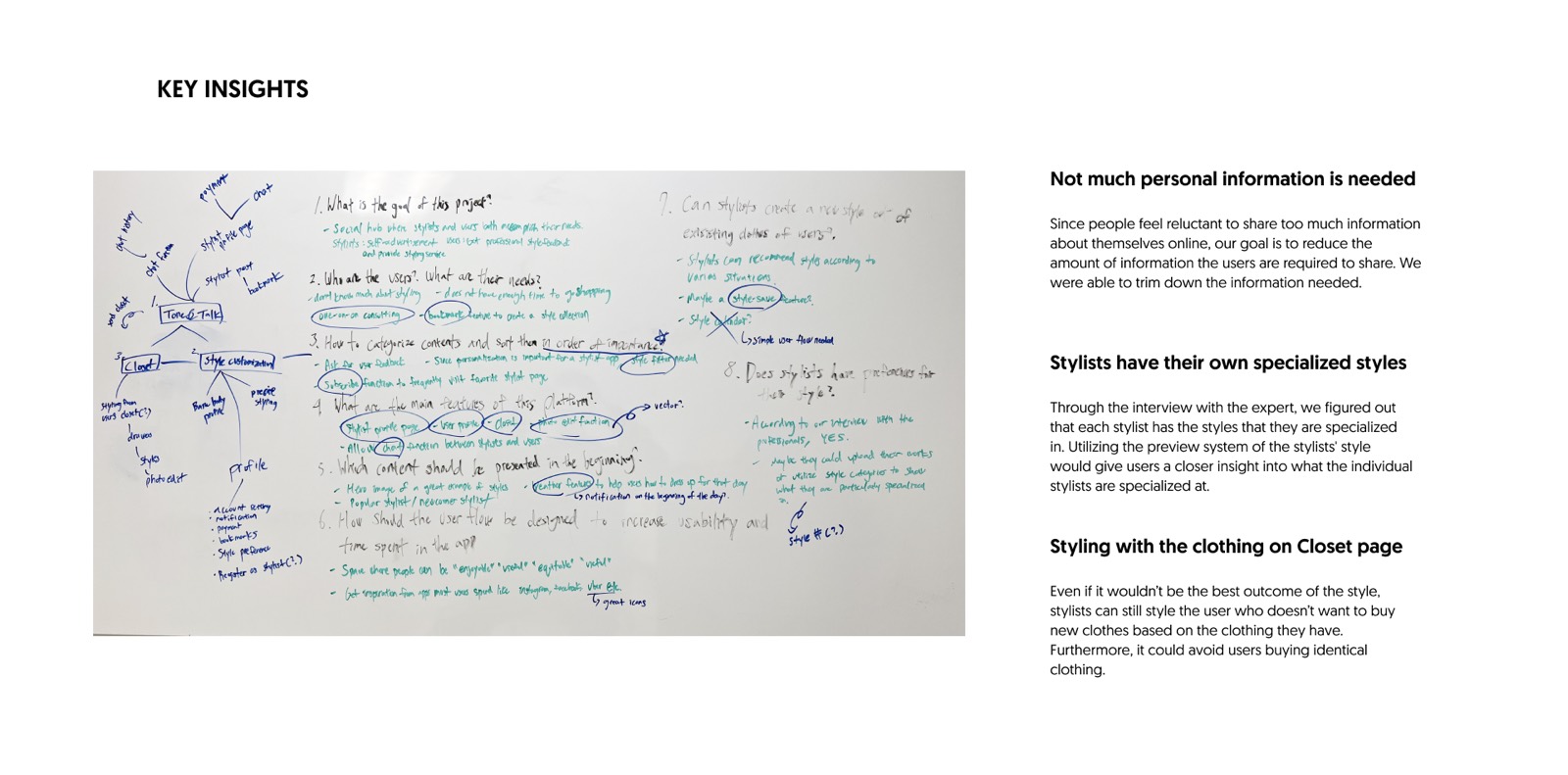
  1. Not much personal information is needed
    Since people feel reluctant to share too much information about themselves online, our goal is to reduce the amount of information the users are required to share. We were able to trim down the information needed.

  2. Stylists have their own specialized styles
    Through the interview with the expert, we figured out that each stylist has the styles that they are specialized in. Utilizing the preview system of the stylists' style would give users a closer insight into what the individual stylists are specialized at.

  3. Styling with the clothing on Closet page
    Even if it wouldn’t be the best outcome of the style, stylists can still style the user who doesn’t want to buy new clothes based on the clothing they have. Furthermore, it could avoid users buying identical clothing.

Slide: Key Insights — brainstorm whiteboard photo with the three insight paragraphs

User Persona

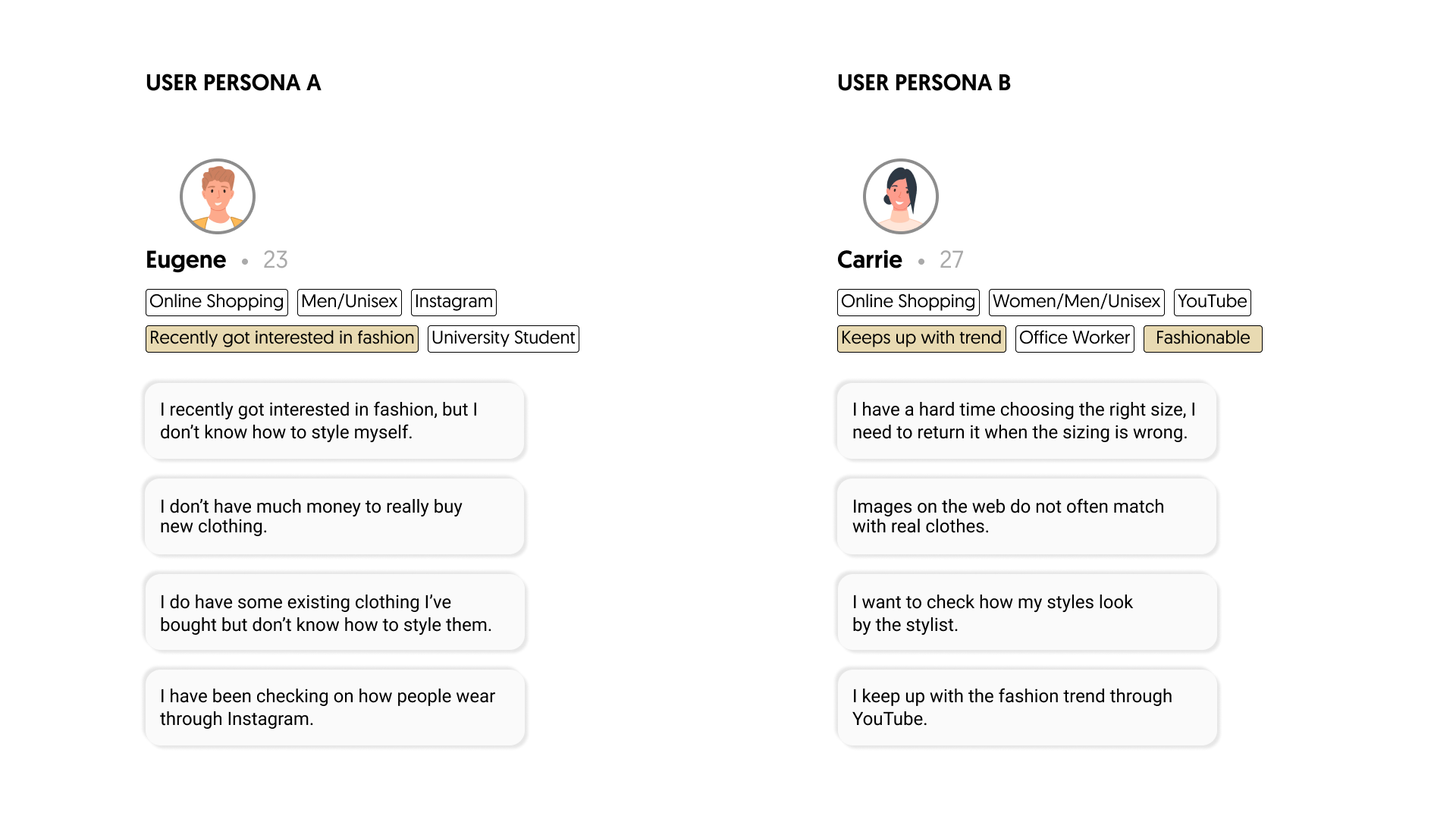
User persona slide: Eugene (23) and Carrie (27) with need statements

Information Architecture

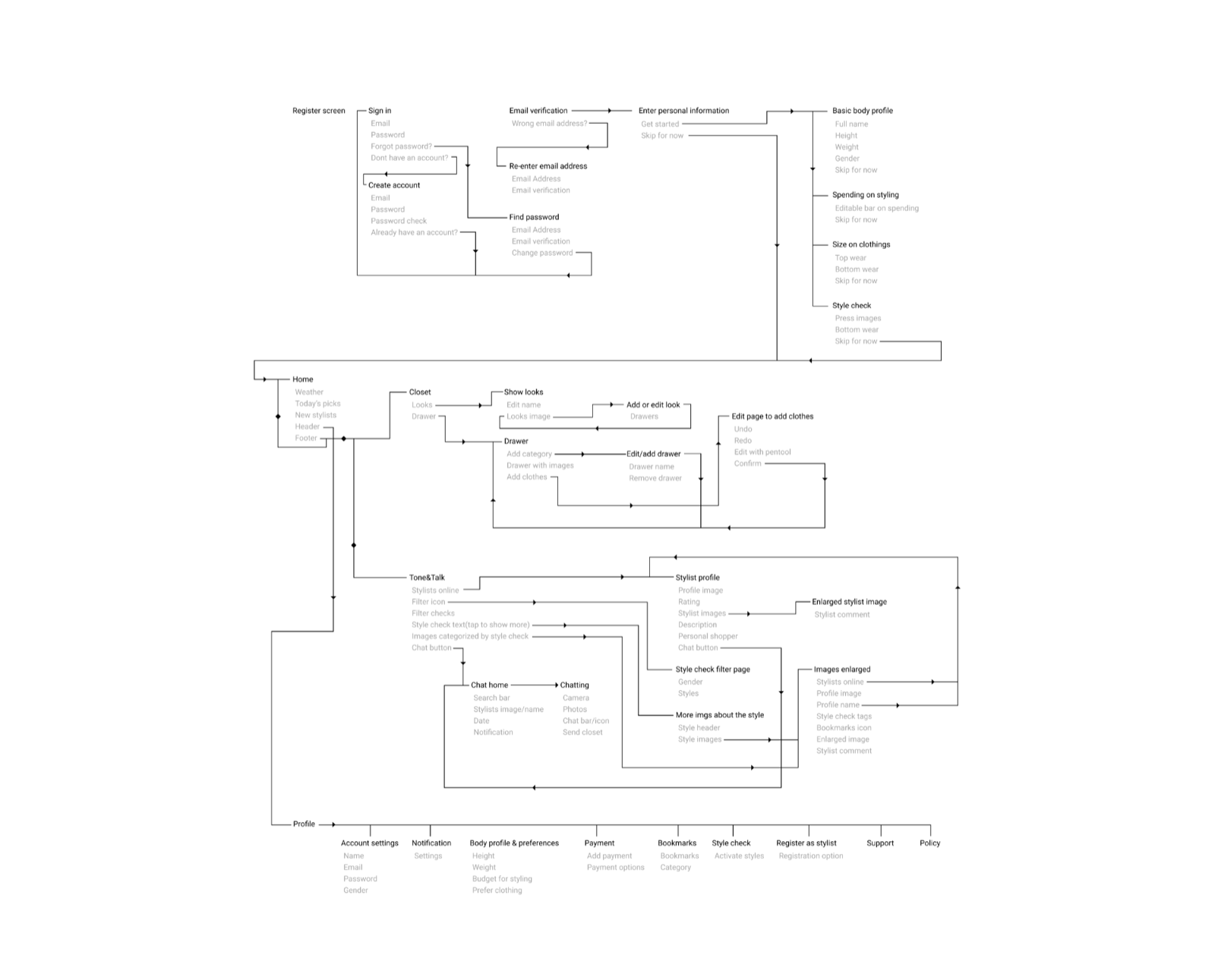
Fig app information architecture: full sitemap from Register/Sign in to Home, Closet, Tone&Talk, and Profile

Userflow

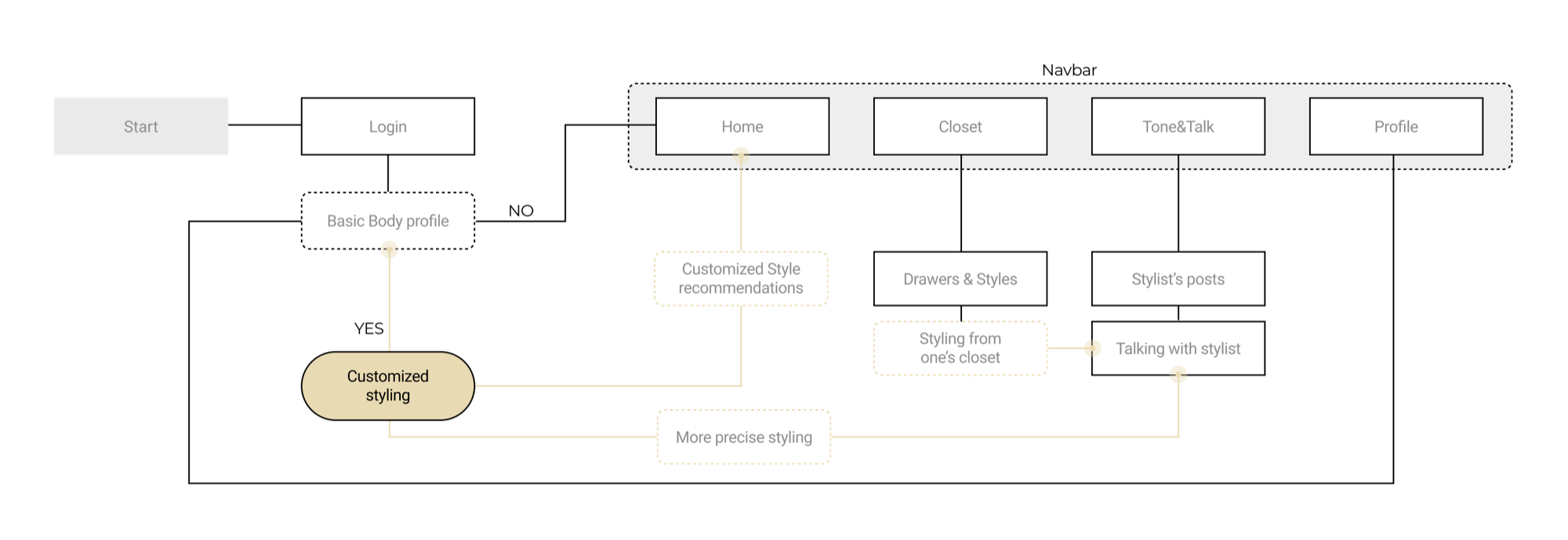
Userflow diagram: Start, Login, Basic Body profile branch, Home, and styling loop

Designing brand & Constructing wireframe

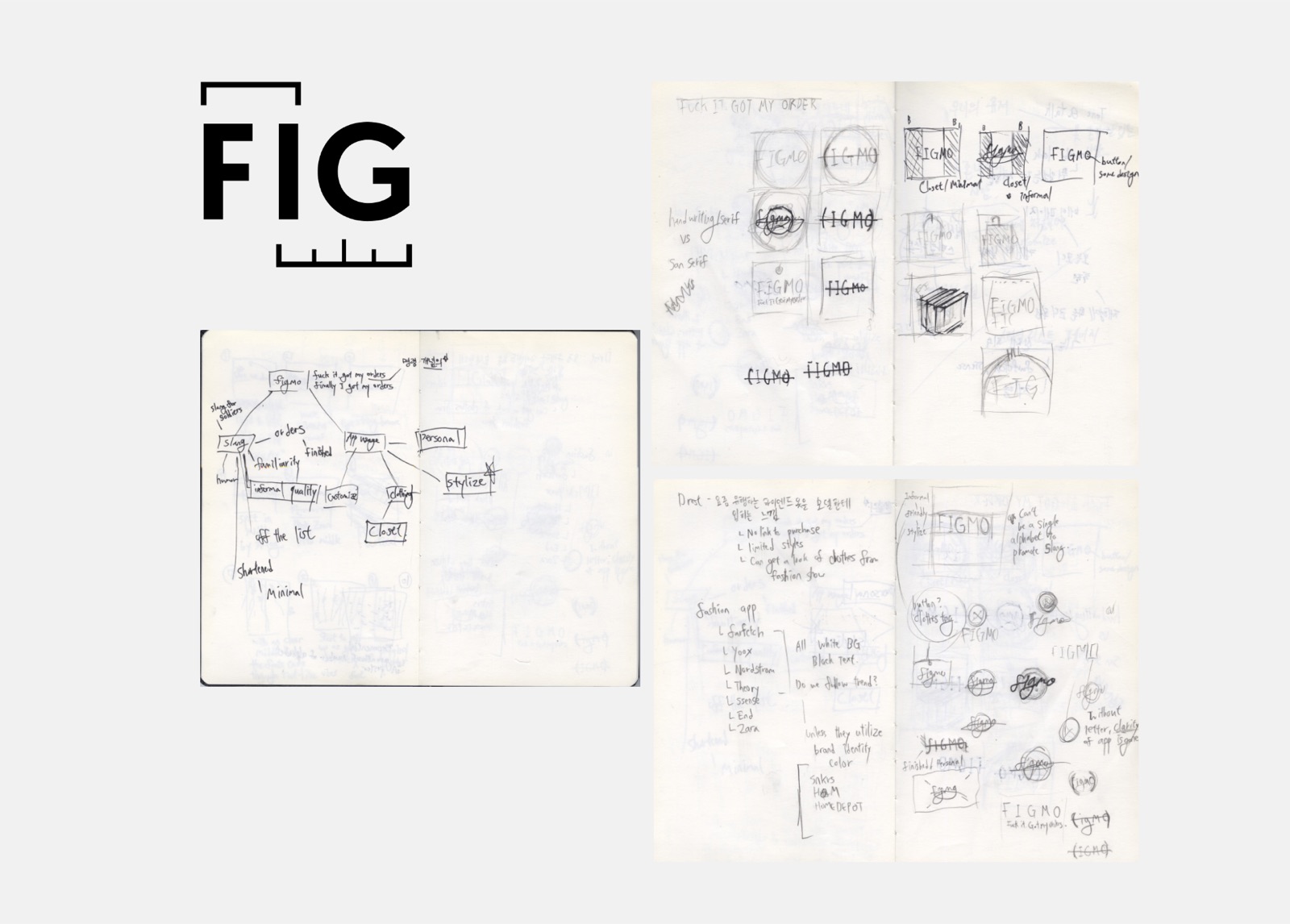
The brand's name FIG has originated from the notion of Adam and Eve sewing fig leafs together to make their own clothing. As our app will purpose to be used for personalized styling and finding new clothing, we have given an emphasis on personalization when developing our logo, in which now have an visual identity of an ruler for measurement.

Logo development: FIG wordmark with ruler marks, naming mindmap, and logo iteration sketches
Tilted montage of grayscale wireframe screens

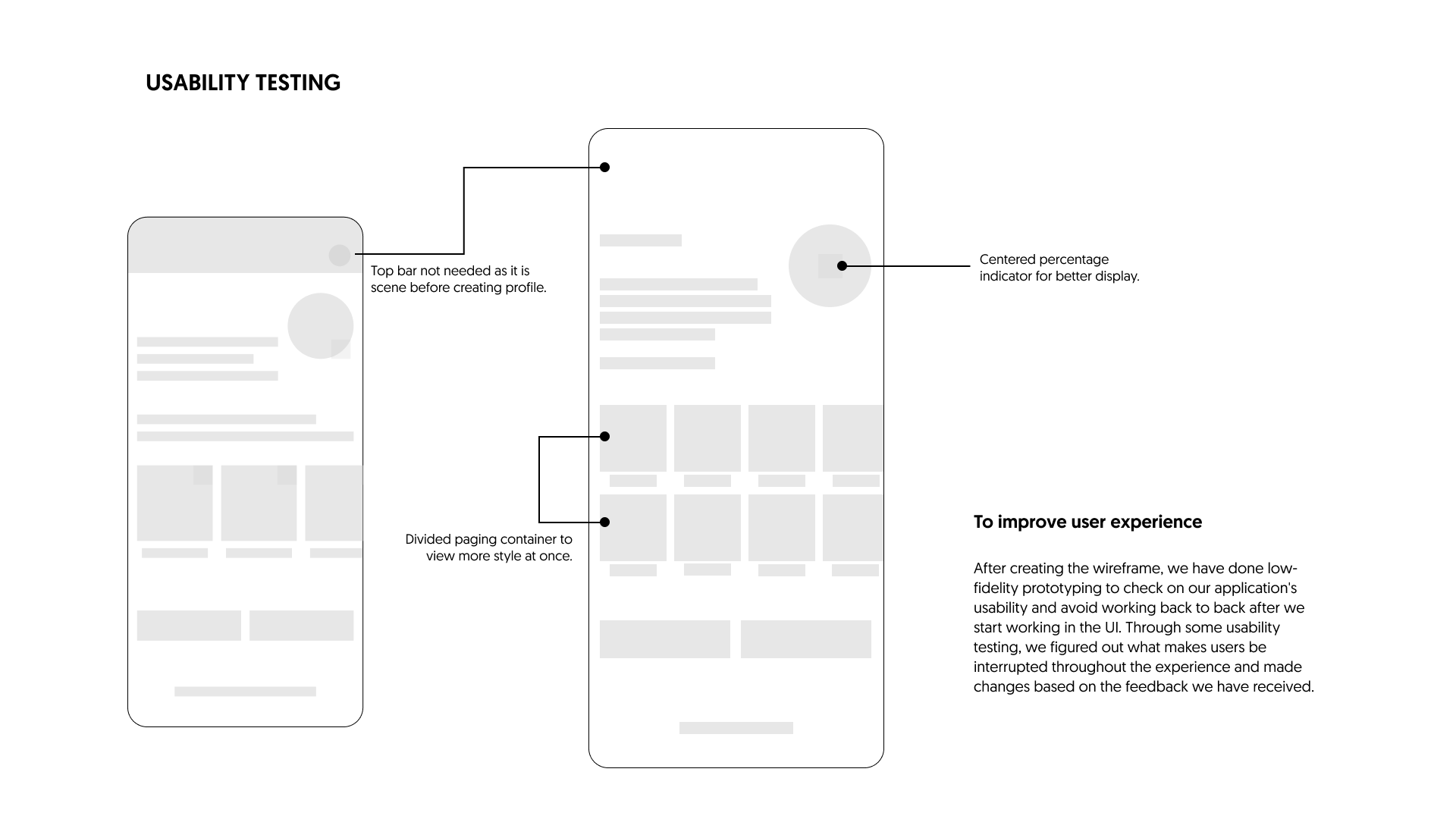
Usability Testing

After creating the wireframe, we have done low-fidelity prototyping to check on our application's usability and avoid working back to back after we start working in the UI. Through some usability testing, we figured out what makes users be interrupted throughout the experience and made changes based on the feedback we have received.

Usability testing slide with annotated low-fidelity wireframes

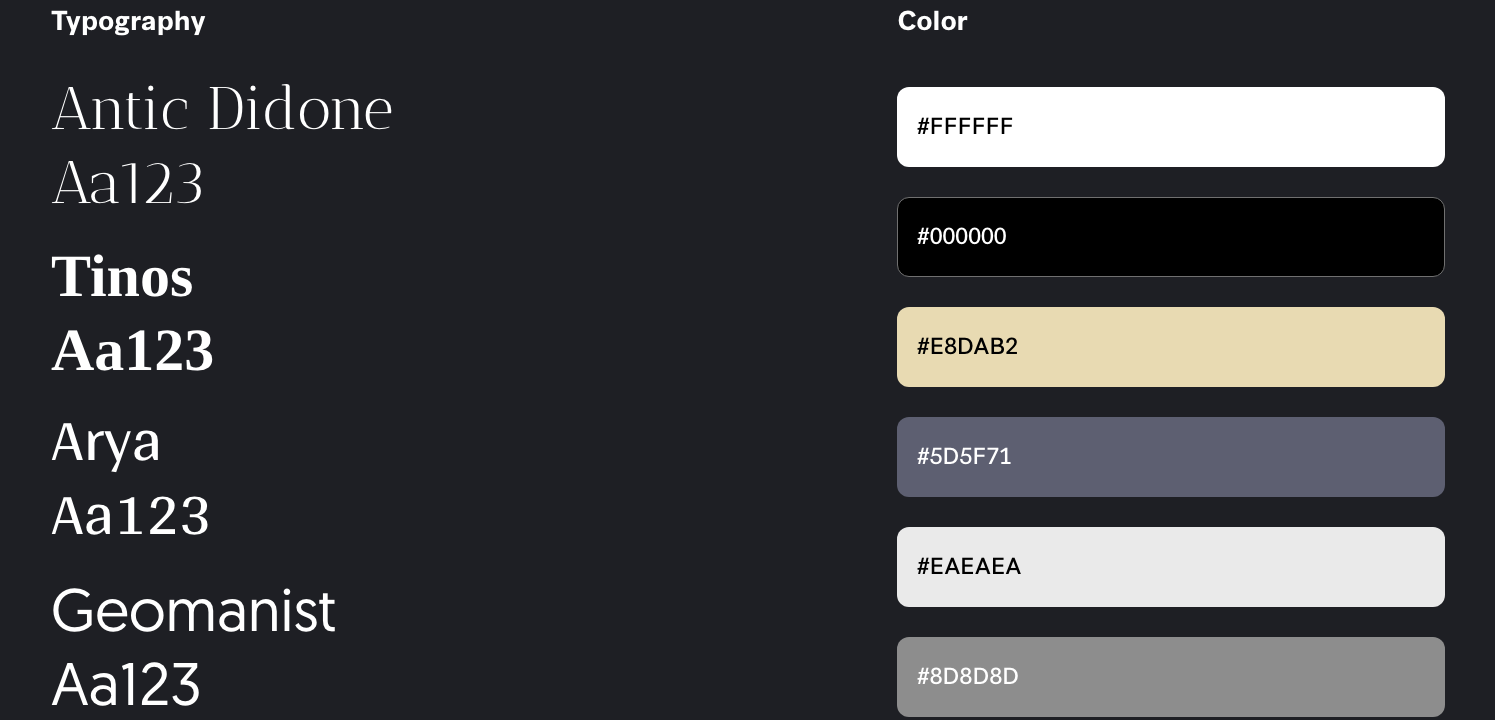
Visual Identity

Visual identity board: typography and brand color palette including the cream #E8DAB2

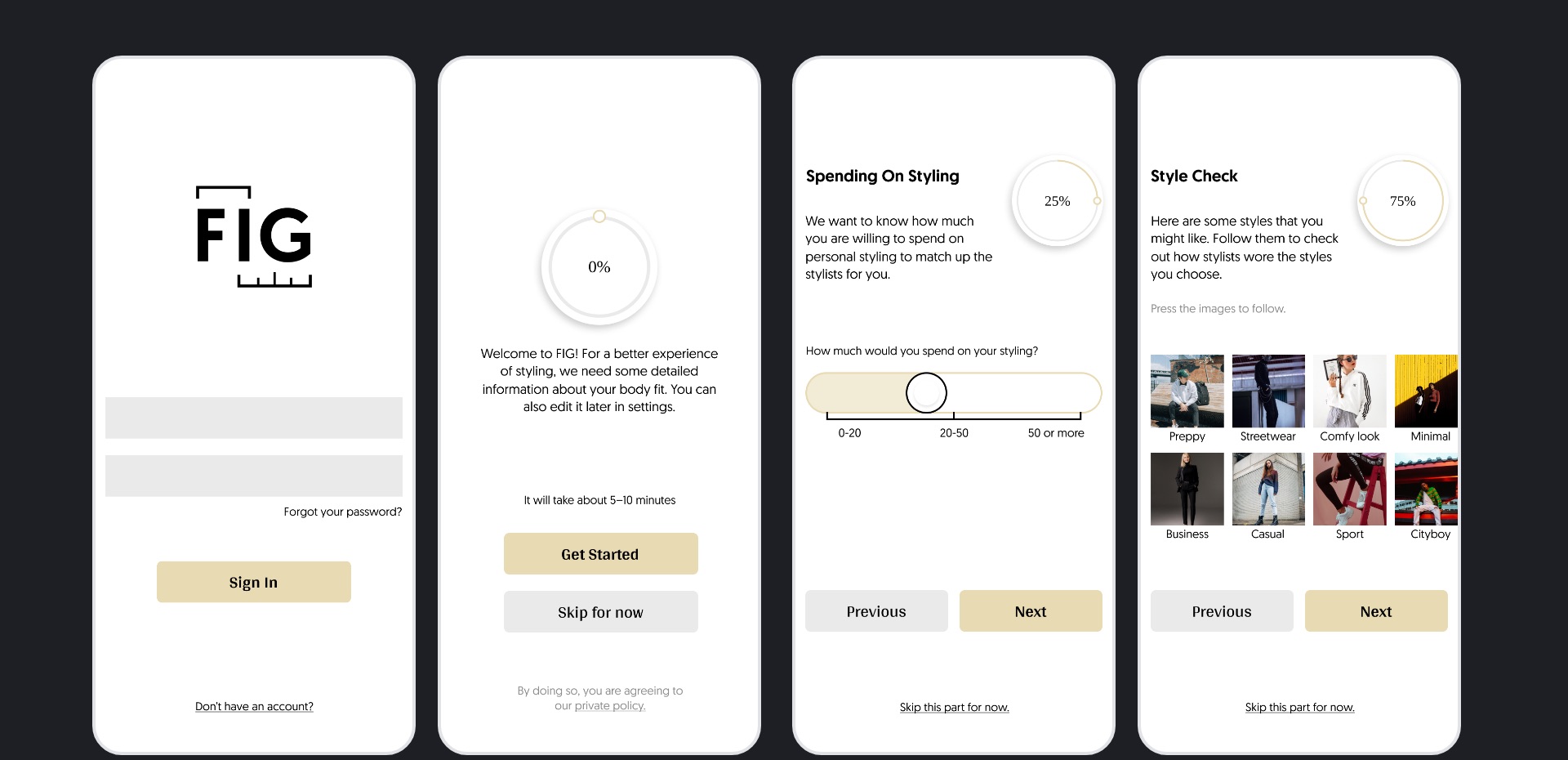
Final UI

Final UI: sign-in and onboarding flow — body-fit, spending-on-styling, and style-check screens

Personalizing information about our physical appearance is essential for a great styling experience.

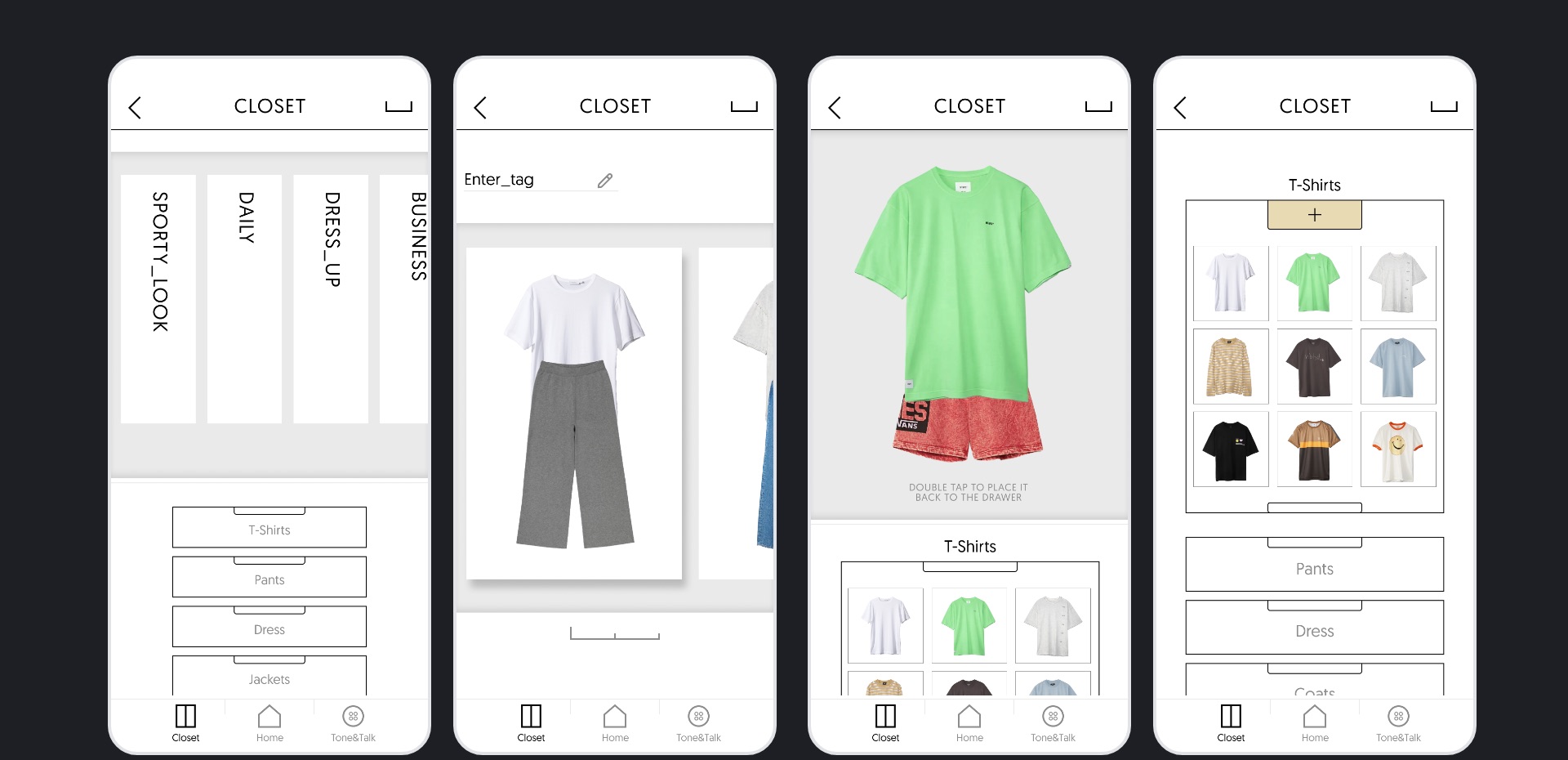
Final UI: closet flow — hanger categories, enter-tag, and drawer grid screens

Closet design is inspired from the actionj of passing through clothes on hangers and opening drawers organized by categories.

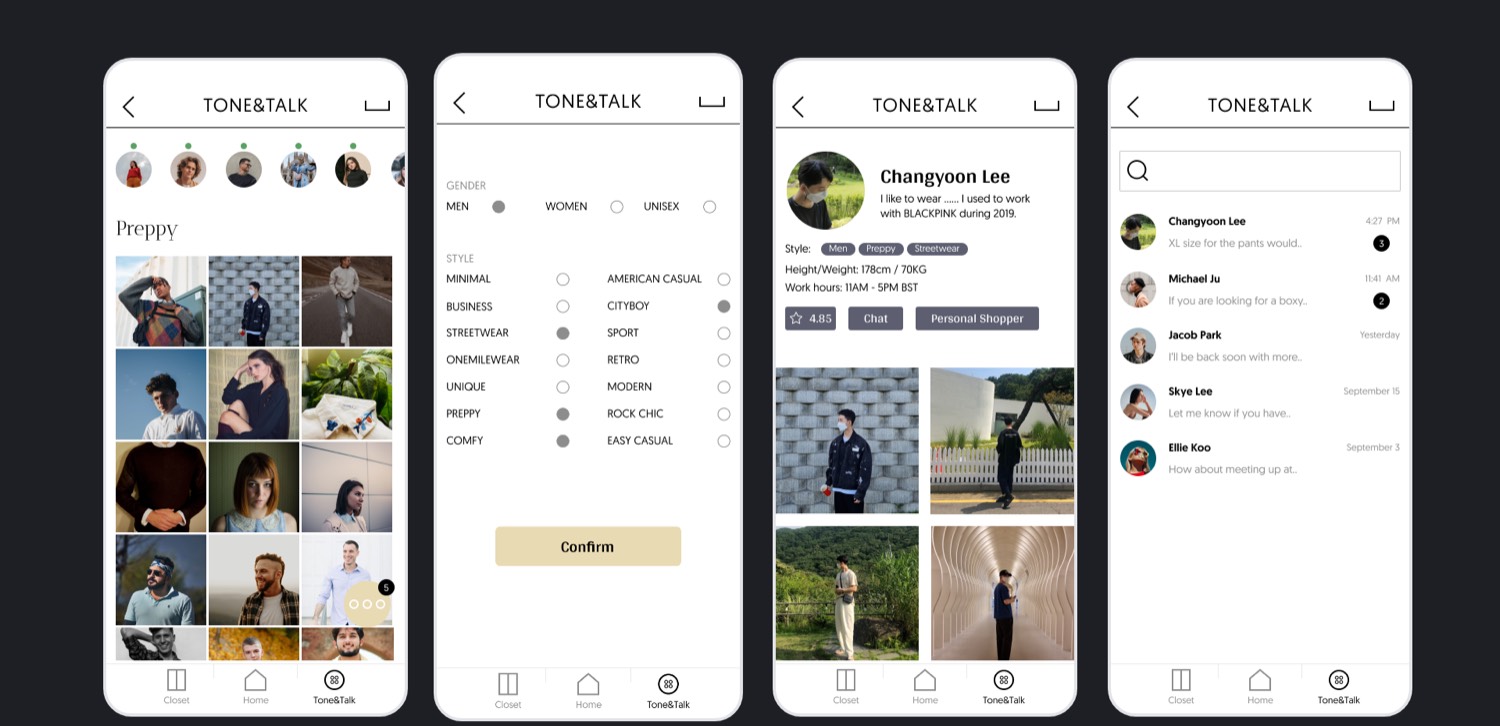
Final UI: Tone & Talk flow — stylist grid, style filter panel, stylist profile, and chat list

We added style filters and chat page to allow users easily browse through selective information and connect with a stylist they need.

What did we learn?

Design process is basically everything. Since gathering up with teammates from three different schools, it starts from the fun part where we create and visualize ideas from scratch by brainstorming and asking questions to professionals. Nevertheless, we had to keep going back to reorganizing information, talking to the developers if our design is feasible, and collecting feedback from others which is essential to improving our project. If we can’t avoid it, maybe we just have to enjoy it.
Works